Calm Night Terror Help: Gentle Steps for Your Child
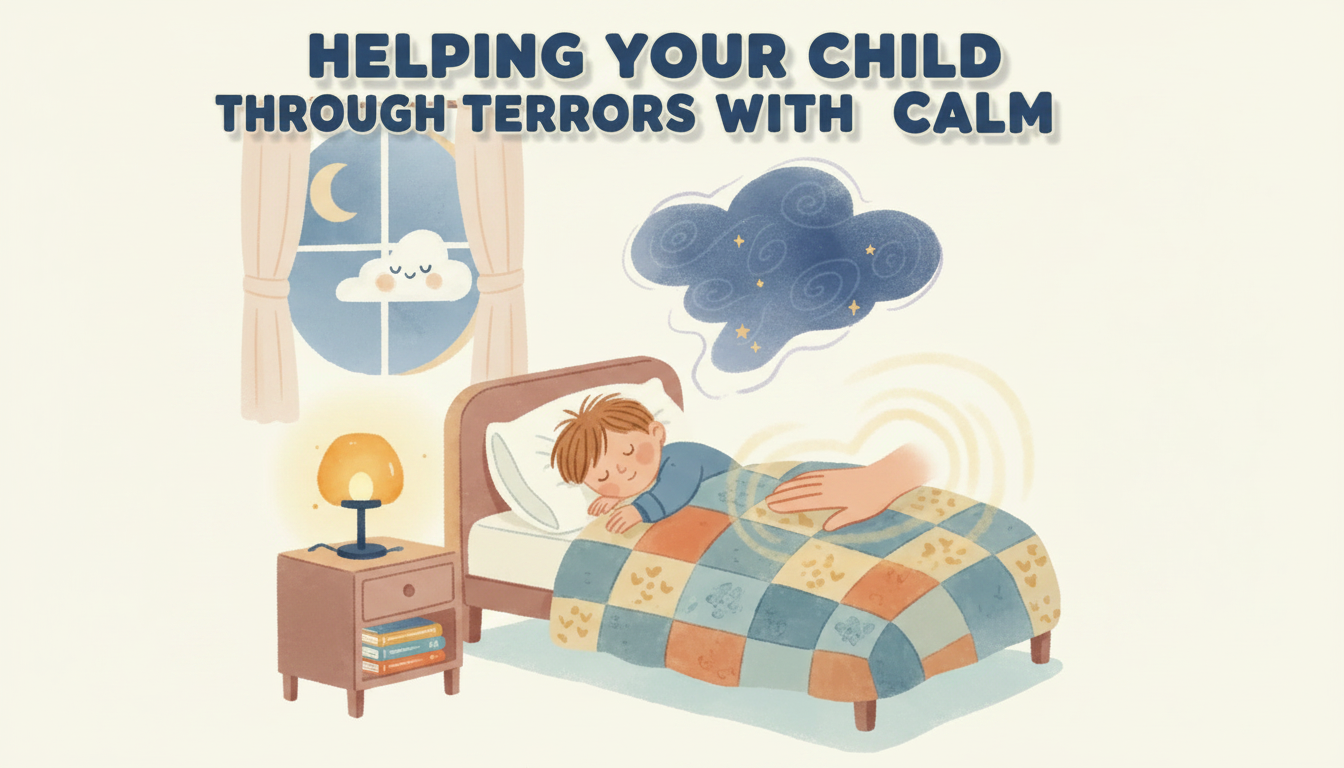
Helping Your Child Through Night Terrors with Calm
Night terrors can feel scary and confusing—especially when a child looks awake but can’t be comforted. A calm, gentle approach can keep everyone safer, shorten episodes, and support better sleep over time. This guide explains what night terrors are, what to do in the moment, how to reduce triggers, and when to seek extra support. For medical overviews and reassurance, see guidance from HealthyChildren.org (American Academy of Pediatrics) and the Mayo Clinic.
What Night Terrors Look Like (and Why Comfort Doesn’t “Work” the Usual Way)
Night terrors often look intense, but they’re usually a partial arousal from deep non-REM sleep. That means your child’s brain is “offline” for conversation and reasoning, even if their eyes are open.
- Common signs: sudden screaming or crying, sweating, rapid breathing, wide eyes, sitting up, thrashing, seeming “not there,” pushing a parent away.
- Timing: most episodes happen in the first third of the night (often within 1–3 hours of falling asleep).
- Memory: children typically don’t remember the episode in the morning, even when it looked dramatic.
- Why soothing feels ineffective: they aren’t fully awake, so the usual “talk it through” comfort can accidentally add stimulation and prolong the episode.
Night Terrors vs. Nightmares: Quick Comparison
Use the differences below to choose the right response: soothe a nightmare, protect and wait out a night terror. If you’re unsure, start with safety and minimal stimulation, and try gentle reassurance without pushing full wakefulness.
How to Tell the Difference at Night
| Feature | Night terrors | Nightmares |
|---|---|---|
| When it happens | First 1–3 hours after falling asleep | Later in the night (more common toward morning) |
| Child’s awareness | Seems awake but is confused and not responsive | Awake or easily awakened and responsive |
| Memory the next day | Usually none | Often remembers and can describe it |
| Best parent approach | Keep safe, stay calm, minimal interaction, allow return to sleep | Comfort, talk through fear, reassurance, help re-settle |
| Duration | Often 5–15 minutes (can feel longer) | Varies; usually shorter once comforted |
What to Do During a Night Terror: Calm, Safety, and Minimal Stimulation
Think of your role as “nighttime lifeguard”: close by, steady, and focused on safety rather than conversation.
- Keep stimulation low: dim lights, quiet voice, slow movements. Avoid turning on bright overhead lights or bringing multiple adults into the room.
- Prioritize safety first: gently block kicking, move sharp objects, and keep walkways clear. Consider a bed rail, keep stairs gated, doors secured, and windows locked if wandering is a risk.
- Avoid shaking, yelling, or quizzing: repeated questions (“What’s wrong?” “Do you know me?”) can increase agitation.
- Don’t force wake-up unless necessary: many children become more distressed if fully awakened mid-episode. If immediate safety requires it (for example, they’re about to fall), use the gentlest interruption possible.
- Use short, steady phrases: “You’re safe. I’m here.” Repeat without demanding eye contact or answers.
- Guide rather than restrain: if your child is moving, use your body as a soft barrier and “steer” them away from hazards instead of holding them tightly.
- Let sleep return: when intensity drops, keep interactions brief and soothing so the brain can slide back into sleep.
Gentle Parenting Scripts That Keep Connection Without Escalation
These phrases support connection while respecting that your child may not be able to process language during a night terror.
- During the episode (low voice): “You’re safe. I’ve got you. It will pass.”
- If your child tries to get out of bed: “I won’t let you get hurt. Let’s stay right here.”
- If siblings wake up: “Everything is okay. You can go back to sleep. I’m helping.”
- In the morning (if your child brings it up): “Sometimes brains get stuck between sleep and waking. If it happens again, I’ll stay close to keep you safe.”
- What to skip: avoid a detailed play-by-play recounting. For some kids, too much detail can create new bedtime worry.
Common Triggers to Check (and What Helps Most)
Night terrors often flare when the nervous system is under extra strain—especially from overtiredness.
Prevention Plan: Reduce Episodes Over the Next 2–4 Weeks
When to Talk to a Pediatrician or Sleep Specialist
A Simple, Downloadable Plan for Calm Nights
- Helping Your Child Through Night Terrors with Calm (Digital Download) includes step-by-step in-the-moment checklists, gentle scripts, a safety setup guide, and an easy log to spot patterns faster.
- If anxiety and stress are running high for caregivers, steady mindset practices can help you stay grounded at bedtime and during wake-ups: Benefits of Positivity Bundle: Fuel Your Mind, Build a Positive Mindset & More.
FAQ
Should a child be woken up during a night terror?
Usually no—most children aren’t fully awake, and waking them can increase confusion and prolong distress. Focus on safety and minimal stimulation, and only interrupt sleep if immediate injury risk requires it or if you’re using scheduled awakenings as a prevention method.
How long do night terrors last, and will my child remember them?
Most night terrors last about 5–15 minutes, though they can feel much longer in the moment. Children typically have little to no memory of the episode the next day.
When are night terrors a sign of something more serious?
Talk to a pediatrician if episodes are frequent or escalating, if injuries occur, if your child has significant daytime sleepiness, or if there are breathing concerns like loud snoring or gasping. Seek medical guidance as well for unusual movements, prolonged stiffening, or any concern for seizures.











Leave a comment