Newborn Rhythm Made Simple: Gentle Transition System
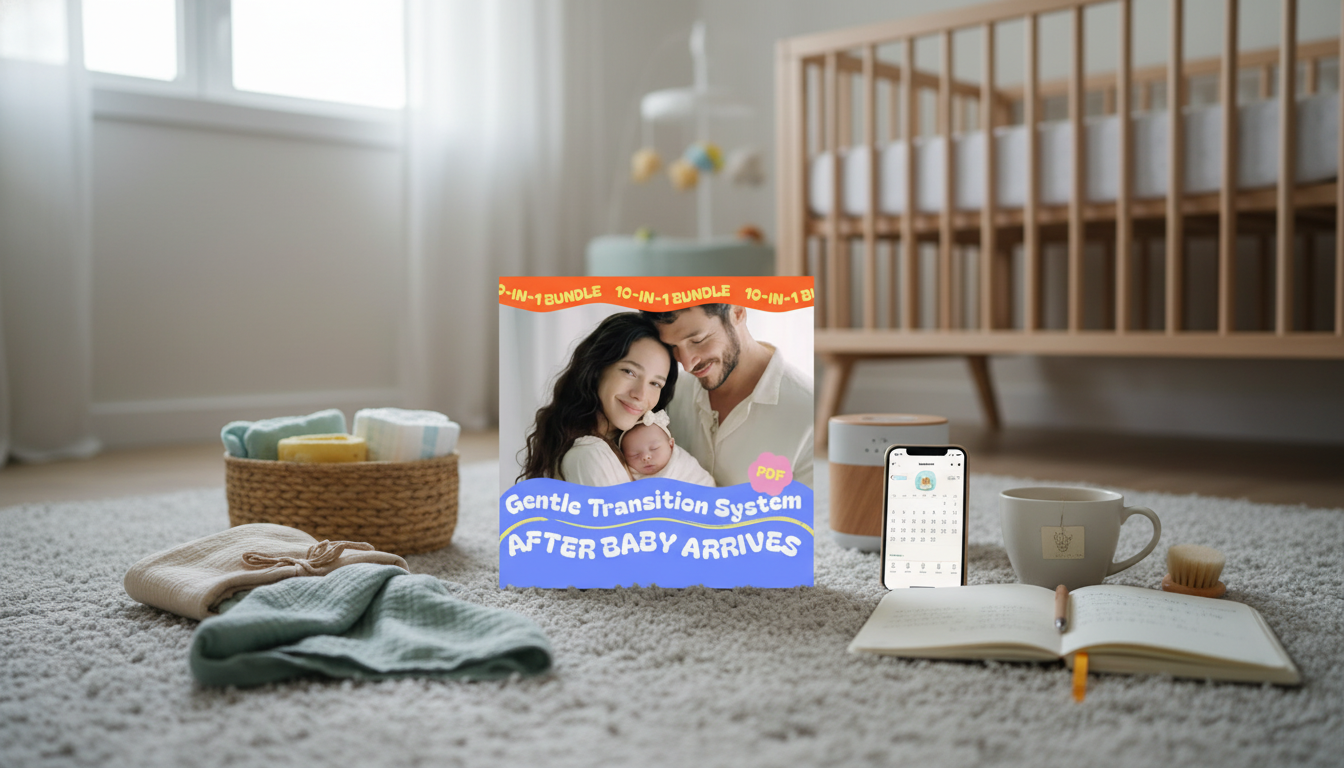
Gentle Transition System After Baby Arrives: a calmer way to find your newborn “groove”
The first weeks with a newborn can feel like a constant loop of feeding, sleep, recovery, and learning new cues. A gentle transition system helps turn that blur into simple, repeatable routines—so care tasks, communication, and self-care don’t rely on memory or willpower when everyone is tired. Instead of chasing a perfect schedule, you build a few dependable sequences you can repeat on the hardest days and expand on when things get easier.
If you like checklists, quick templates, and “tell me what to do next” guidance, the Gentle Transition System After Baby Arrives – 10-in-1 Bundle for Adjusting to Life with a Newborn is designed to keep daily decisions lighter while still leaving room for flexibility.
What “gentle transition” looks like in the first month
A gentle transition isn’t about rigid timing—it’s about stable patterns that can flex with growth spurts, cluster feeding, and unpredictable sleep.
- Stability over perfection: small routines that bend without breaking (like a simple feed–change–soothe sequence).
- Support for the whole household: baby care plus recovery, partner coordination, and mental-load relief.
- Cue-based care: responding to hunger, sleepiness, and comfort signals rather than forcing a clock-based plan.
- Short planning cycles: focusing on “today and tonight” instead of long-range plans.
- Built-in compassion: normalizing contact naps, frequent diaper changes, and the reality that some days are just louder and messier.
For newborn basics and safety guidance, resources like the American Academy of Pediatrics newborn and infant care pages can be a helpful reference alongside your pediatrician’s advice.
Who this 10-in-1 bundle is designed for
- First-time parents who want clear, step-by-step guidance for newborn basics and daily rhythm.
- Parents recovering from birth who need simplified routines and reminders for rest, hydration, and support.
- Partners and caregivers who want a shared plan and a consistent approach to soothing and handoffs.
- Families with older siblings who need smoother transitions and predictable household flow.
- Anyone who prefers systems and checklists to reduce decision fatigue during sleep deprivation.
What’s inside the bundle and how each piece supports day-to-day life
The bundle is built to reduce “What do we do now?” moments by turning common newborn needs into quick pages you can glance at while holding the baby.
- Routines and rhythm tools: gentle daily flow templates (morning/day/evening) to reduce constant replanning.
- Feeding support: guidance for common newborn feeding patterns, tracking options, and questions to bring to appointments.
- Sleep and soothing: calming strategies, settling routines, and environment checklists (light, sound, temperature, layering).
- Diapering and hygiene: practical supply lists, station setup, and quick “what’s normal” references.
- Parent recovery and support: rest prompts, nourishment reminders, and boundaries for visitors and messages.
- Communication and teamwork: scripts and handoff checklists so both caregivers know what’s been done and what’s next.
- Home setup: minimal-prep organization ideas that keep essentials accessible in multiple rooms.
- Milestones and appointments: planning pages for pediatric visits, questions, and notes to reduce forgetfulness.
- Emotional wellbeing: stress-reducing practices and quick resets that fit into short breaks.
- Printable/digital-friendly format: use on a phone/tablet or print the pages most helpful right now.
Quick map of bundle tools and when to use them
| Tool | Best time to use | What it helps with |
|---|---|---|
| Daily rhythm template | Day 1–30 | Reduces decision fatigue; keeps essentials consistent |
| Feeding log / notes page | Early weeks and appointments | Spots patterns; supports clearer conversations with clinicians |
| Sleep + soothing checklist | Evenings and fussy periods | Creates a repeatable calming sequence |
| Caregiver handoff sheet | Shift changes | Prevents missed feeds/diapers and repeated questions |
| Recovery & self-care prompts | Daily | Protects rest, hydration, and realistic expectations |
| Visitor boundaries script | First 2–6 weeks | Reduces stress and protects newborn routines |
A simple way to use the system without feeling boxed in
The most sustainable approach is to use the system like a set of guardrails: supportive, not controlling.
Setting up the home for calmer newborn care
When to seek extra support
- Feeding concerns: poor weight gain, persistent vomiting, signs of dehydration, or fewer wet diapers than expected.
- Sleep and breathing concerns: unusual breathing patterns, persistent lethargy, or unsafe sleep situations.
- Postpartum mental health concerns: persistent sadness, panic, intrusive thoughts, or feeling unable to cope. The CDC’s information on depression among women includes postpartum resources and next steps.
- Relationship strain: repeated conflict due to exhaustion—consider a shift plan and outside support.
- If unsure: bring notes from your tracking pages to pediatric or postpartum appointments to make discussions clearer.
Recommended bundles to support your newborn season
- Gentle Transition System After Baby Arrives – 10-in-1 Bundle for Adjusting to Life with a Newborn: a practical set of templates, checklists, scripts, and tracking pages to simplify daily care and caregiver teamwork.
- Benefits of Positivity Bundle: Fuel Your Mind, Build a Positive Mindset & More: a supportive add-on for mindset and emotional resilience when the days (and nights) feel long.
FAQ
When is the best time to start using a newborn transition system?
Start in late pregnancy with home setup and communication plans, then begin using the daily rhythm and handoff tools as soon as baby arrives. Keep the first week very simple—anchors and quick notes are usually enough.
Will a gentle system work if the baby doesn’t follow a schedule?
Yes. Focus on repeatable sequences (feed, change, soothe, sleep) and flexible anchors rather than fixed times, then adjust based on cues and growth spurts.
Is tracking feeding and sleep necessary?
No—tracking is optional. It can be helpful early on, during concerns, or for appointments, but if logging increases anxiety, switch to brief notes or stop once patterns feel clear.












Leave a comment