5-in-1 Wooden Montessori Activity Toy for Babies
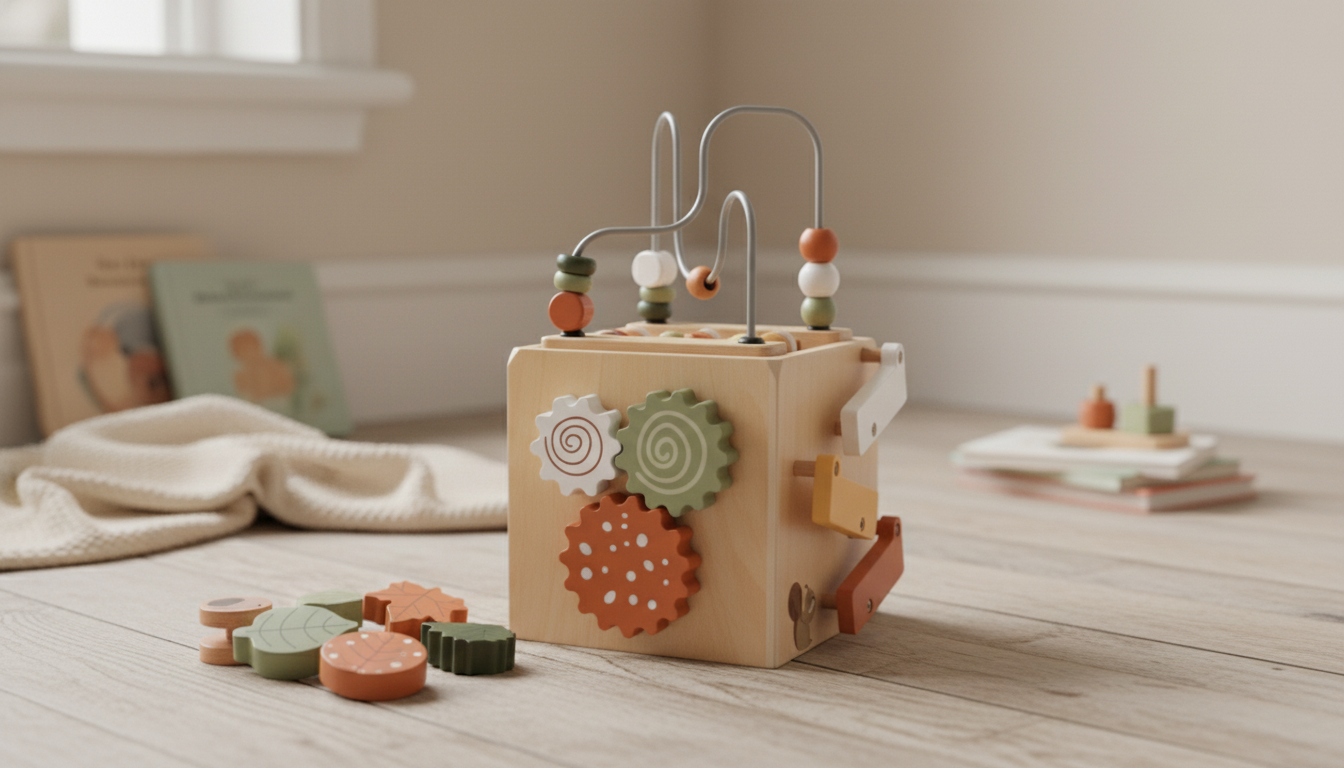
Wooden Montessori Baby Toys – 5-in-1 Multifunctional Educational Playset
A thoughtfully designed wooden playset can turn everyday play into hands-on practice for early coordination, problem-solving, and independent exploration. This 5-in-1 Montessori-inspired set brings multiple activities together in one compact toy, supporting focused play while keeping the space calm and uncluttered. For more guidance, see 20 Best Montessori-Friendly Toys By Age Group.
What Makes a Montessori-Style Wooden Playset Different
Montessori-style baby toys tend to feel “simple” at first glance—but that’s the point. Instead of distracting sounds and flashing lights, the activities are built around clear actions and immediate, satisfying feedback. For further reading, see 20 Montessori-Friendly Toys.
- Built around simple, purposeful activities that invite repetition and mastery
- Encourages hands-on learning: grasping, fitting, sliding, turning, and matching
- Uses natural materials and a tidy layout that helps babies focus on one task at a time
- Supports independent play with clear cause-and-effect feedback
For families aiming for more screen-free routines, a wooden activity set can become a dependable “work toy” that baby returns to again and again—without overstimulation. For general toy safety considerations (including age-appropriateness and choking hazards), the American Academy of Pediatrics offers helpful guidance here: How to Choose Safe Toys.
What’s Included in a 5-in-1 Multifunctional Playset
A multifunctional wooden playset is designed to do more with less. Instead of swapping out multiple toys to offer variety, babies can explore different actions on a single sturdy base.
- Multiple activity stations in a single wooden toy to reduce toy rotation and clutter
- Varied movements (push, pull, rotate, slide, insert) to exercise different grips and wrist motions
- Clear visual cues that help babies understand what to do without constant direction
- A sturdy base that stays put during play for safer, more confident exploration
If you’re shopping for a compact, everyday option, explore the Wooden Montessori Baby Toys – 5-in-1 Multifunctional Educational Playset, designed for hands-on discovery with multiple stations in one footprint.
Skills Supported During Everyday Play
Babies learn through movement and repetition. A well-made activity playset encourages the kinds of small, purposeful motions that build early control—then keeps those motions interesting by offering slightly different challenges on each side.
- Fine motor development: pincer grasp practice, finger isolation, and hand strength
- Hand–eye coordination: aligning shapes, tracking moving parts, and guiding objects into place
- Early thinking skills: cause-and-effect learning, sequencing, and trial-and-error problem solving
- Language building opportunities: naming colors/shapes, describing actions, and simple turn-taking phrases
- Attention and persistence: short, repeatable tasks that encourage focus without overstimulation
Activity-to-skill map for a multifunctional wooden playset
| Activity type | What baby does | Skills reinforced | Parent prompt (optional) |
|---|---|---|---|
| Shape fitting / sorting | Tries different pieces until one fits | Problem-solving, spatial awareness, pincer grasp | “Turn it. Try again. That one matches.” |
| Sliding / tracking | Moves parts along a path | Wrist control, visual tracking, bilateral coordination | “Slide it to the end. Stop. Go.” |
| Spinning / turning parts | Rotates knobs or wheels | Grip strength, forearm rotation, cause-and-effect | “Turn, turn… now it moves!” |
| Push / pull mechanisms | Pushes levers or pulls tabs | Finger strength, coordination, intentional action | “Push down. Pull up.” |
As babies approach their first birthday, many begin refining grasping, transferring objects between hands, and exploring how things work. For a developmental overview, the CDC milestone guide is a useful reference: Important Milestones: Your Baby By One Year.
Age Fit and How to Introduce It
A multifunctional playset is most successful when it’s introduced gradually. Babies don’t need to master everything at once—starting small keeps play confidence high.
- Start with one side or one activity at a time to keep play manageable and rewarding
- Model once, then pause to let baby attempt independently
- Use short sessions (5–10 minutes) and repeat daily to build familiarity
- Rotate which activity is “featured” to maintain interest without adding more toys
- Always supervise, especially for younger babies who mouth toys during exploration
For families building calm routines, Montessori-at-home guidance can help frame how to set up a simple “choose, work, put away” flow: Montessori at Home (Practical Guidance).
Safety and Material Considerations for Wooden Baby Toys
Wooden toys can be wonderfully durable, but the details matter—especially for babies who explore with their mouths and hands. Before offering any activity toy, do a quick safety scan and keep regular checks as part of your routine.
Care, Cleaning, and Storage
A Practical Option for Screen-Free, Skill-Building Play
More in-store picks (in stock)
- Wooden Montessori Baby Toys – 5-in-1 Multifunctional Educational Playset (Everyday fine-motor and cause-and-effect play)
- Large Capacity Y2K Puppy Pencil Case (A handy organizer for crayons, markers, or small kid essentials)
- Benefits of Positivity Bundle: Fuel Your Mind, Build a Positive Mindset & More (A self-care companion for caregivers building calmer routines)
FAQ
What age is a multifunctional wooden Montessori playset best for?
Many families start around 6–12 months and continue well into toddlerhood, but readiness varies. Begin with the simplest actions (like sliding or turning) and supervise closely, especially for babies who still mouth toys frequently.
How should wooden baby toys be cleaned safely?
Wipe with a slightly damp cloth, using mild soap if needed, and dry right away. Avoid soaking, bleach, or dishwashers, and do a quick check for splinters or loose parts before the next play session.
How long should a baby play with an activity toy in one sitting?
Short sessions of about 5–10 minutes are often ideal, repeated across the day. Stop when your baby shows fatigue or frustration—steady repetition matters more than long playtime.










Leave a comment