Gentle Parenting Scripts to Handle Kids’ Lying Calmly

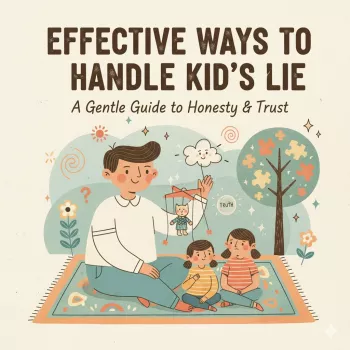
Effective Ways to Handle Kids’ Lies with Calm, Clear, Gentle Parenting
Kids lie for many reasons—fear of consequences, wishful thinking, protecting someone’s feelings, or testing boundaries. A gentle approach focuses on safety, connection, and skill-building so honesty becomes easier over time. Below are age-based insights, in-the-moment scripts, and simple routines that strengthen trust without shaming.
What a Lie Can Mean at Different Ages
“Lying” isn’t one behavior with one meaning. The same words can signal very different needs depending on a child’s stage and stress level.
- Toddlers and preschoolers: They often blend imagination and reality. Treat it as learning (“real vs. pretend”), not a moral failure.
- Early elementary: Lies commonly show up to avoid trouble, disappointment, or losing approval. Reducing fear and teaching repair skills usually helps more than escalating punishments.
- Older kids and tweens: Lying may protect privacy, social standing, or independence. Prioritize relationship and clear boundaries rather than constant monitoring.
- Watch patterns: A sudden spike in lying can point to anxiety, overwhelm, sleep problems, or expectations that outpace skills.
- Separate behavior from identity: Avoid labels like “liar.” Talk about “a lie” as a choice, not who your child is.
The Gentle Parenting Mindset: Safety Before Truth
Honesty grows fastest when the truth feels emotionally safe—especially after mistakes. That doesn’t mean there are no boundaries; it means your child expects you to be calm, consistent, and fair.
- Be predictable: Your reaction matters as much as your rule. A steady tone makes honesty more likely next time.
- Use curiosity over interrogation: Ask what happened, what they felt, and what they were trying to protect.
- Hold two truths: Lying isn’t okay, and your child deserves empathy while learning better choices.
- Keep consequences proportional: Avoid “double punishment” (the mistake plus a blow-up). Overreactions train kids to hide more.
For more on supportive discipline that protects connection, see the American Academy of Pediatrics guidance on positive discipline.
A 5-Step Script for When You Catch a Lie
When you already know the truth, the goal shifts: help your child feel safe enough to come clean, then practice repair.
- Pause and regulate: Take one breath, lower your voice, and soften your face.
- Name the goal: “I want to understand what happened so we can fix it.”
- State the observation (no accusation): “I see marker on the wall, and you said you didn’t do it.”
- Offer an honesty bridge: “It can be hard to tell the truth when you’re worried about getting in trouble.”
- Move to repair: “Let’s clean it together, and then we’ll talk about what to do next time.”
Common Scenarios and Gentle Responses
| Scenario | What it might mean | What to say | Next step |
|---|---|---|---|
| “I didn’t take it” (but you find it) | Fear of consequences or impulse control | “Looks like it ended up with you. Let’s tell the truth and make it right.” | Return item together; practice asking/borrowing |
| “I did my homework” (but it’s incomplete) | Overwhelm, avoidance, perfectionism | “Thanks for telling me. Let’s break it into smaller steps.” | Create a short work plan; check-in timer |
| Blaming a sibling or pet | Avoiding shame; weak accountability skill | “It’s okay to make mistakes. What’s the honest story?” | Repair harm; role-play owning mistakes |
| Exaggerated stories | Seeking attention or experimenting with narrative | “That’s a fun story. Did it happen for real or in pretend?” | Give positive attention; teach “real vs pretend” language |
| Lying about online use | Need for autonomy; unclear boundaries | “I care about safety, not catching you. Let’s reset the rules together.” | Review device rules; add transparent check-ins |
Build a Home Culture Where Truth Is Easier
For practical, age-specific parenting tools, the CDC Essentials for Parenting offers helpful routines for toddlers and preschoolers.
Teaching Honesty Skills: What to Practice (Not Just What to Forbid)
It can also help to remember that “lying” is defined as an intentional false statement; younger kids may not fully understand intent yet. The APA Dictionary of Psychology entry on lying is a useful reference for that distinction.
When Consequences Help—and When They Backfire
Red Flags: When Lying Needs Extra Support
A Printable Routine to Keep on the Fridge
Digital Guide and Checklist for Teaching Honesty
If it’s hard to remember scripts during emotional moments, a compact, printable-friendly resource can keep responses consistent between caregivers. Effective Ways to Handle Kid’s Lie (Parenting eBook PDF download) includes practical scripts, age-based examples, and step-by-step repair plans designed for everyday situations.
- Large Capacity Y2K Puppy Pencil Case for keeping “repair tools” together (erasers, note cards for written confessions, small timers).
- Benefits of Positivity Bundle: Fuel Your Mind, Build a Positive Mindset & More for caregivers who want extra support staying steady and encouraging.
FAQ
Should a child be punished for lying?
Harsh punishment often increases fear, which can lead to more hiding and more lies. Use calm, connected responses and consequences tied to repair (returning an item, cleaning a mess, redoing a task) so your child learns what to do next time.
What if my child lies even when the truth is obvious?
That often signals shame or fear, not “defiance.” Try an honesty bridge (“It’s hard to tell the truth when you’re worried”) and offer a do-over, then focus on solving the problem instead of proving them wrong.
How do I teach honesty without scaring my child?
Keep boundaries predictable, model truth-telling, and praise the bravery of honesty in specific moments. Scripts, role-play, and a simple checklist routine help kids practice telling the truth when they’re nervous.









Leave a comment