Pet Effect on Mental Health: Daily Calm Toolkit

The Pet Effect on Mental Health: A Research-Backed Toolkit for Daily Calm, Connection, and Resilience
Pets can shape daily mood, stress levels, and routines in ways that feel obvious—yet the strongest benefits often come from using the human–animal bond intentionally. Instead of hoping a pet magically fixes a hard season, it helps to turn supportive moments (a walk, a purr, a cuddle, a feeding routine) into simple, repeatable practices. This guide shares what research suggests about how companion animals can support mental well-being, who tends to benefit most, and how to translate that evidence into a practical, daily toolkit you can actually stick with.
Why pets can influence mental well-being
Many pet owners describe a steadier baseline when an animal is part of the home. That’s not just sentiment—several pathways make sense from a behavioral and physiological perspective.
- Companionship and perceived social support: Feeling “seen” (even by a nonverbal companion) can buffer stress and loneliness, especially during isolation, relocation, grief, or other transitions.
- Structure and routine: Feeding, walks, cleaning, and play create anchors in the day. Predictable cues can reduce aimless rumination and help time feel more organized.
- Touch and shared calm: Gentle petting and quiet presence can support relaxation responses. Many people notice faster downshifts after tense moments when they pause with their pet.
- Positive affect and motivation: Play, novelty, and a nonjudgmental companion can nudge emotional recovery—especially on low-energy days when “do something for yourself” feels too abstract.
- Health-adjacent behaviors: Pets often increase movement, outdoor exposure, and consistent sleep/wake cues, indirectly supporting mental health over time.
Common mental health goals and pet-centered practices
| Goal | Pet-centered practice | When to use it | How to measure progress |
|---|---|---|---|
| Lower acute stress | 2-minute mindful petting + slow breathing | After a tense call, before sleep | Rate stress 0–10 before/after; track weekly average |
| Reduce loneliness | Daily “connection ritual” (talk, groom, cuddle) + one social check-in | Mornings or early evening | Count days completed; note mood change |
| Increase movement | Short walk or indoor play intervals | Midday slump, after work | Steps/minutes; energy level 0–10 |
| Improve sleep wind-down | Consistent bedtime routine with pet (quiet play, settle cue) | 30–60 minutes before bed | Sleep onset time; nighttime awakenings |
| Strengthen mood stability | Weekly “joy inventory” of pet activities that work best | Weekend review | Identify top 3 practices; repeat next week |
What research tends to show (and what it doesn’t)
Research on pets and mental health often points to meaningful potential benefits, with important caveats. Many studies find associations between pet companionship and improved well-being, but results vary by age, living situation, baseline social support, and the practical realities of care. Benefits tend to feel stronger when the pet fits the household’s capacity—time, finances, housing rules, and the person’s energy—so that caregiving doesn’t become a chronic stressor.
There’s also evidence that interacting with animals can reduce stress markers and increase feelings of calm in the moment; long-term outcomes typically depend on consistent routines rather than occasional “big” bonding moments. Health organizations summarize this balance well: the American Psychological Association notes the promise of pets for stress reduction and social support, while the NIH highlights that effects differ across people and contexts. And because daily care matters, the CDC emphasizes healthy pet practices that protect both humans and animals.
Most importantly, pet ownership is not a substitute for mental health treatment. A pet can be a supportive layer alongside therapy, medication, and community supports. Individual differences matter: allergies, grief sensitivity, caregiver burden, and anxiety about pet health can offset benefits if they aren’t acknowledged and managed.
The toolkit approach: turning “pets help” into repeatable habits
The easiest way to make the bond protective (rather than random) is to treat it like a lightweight system.
Inside the 3-in-1 digital bundle: ebook, guide, and checklist
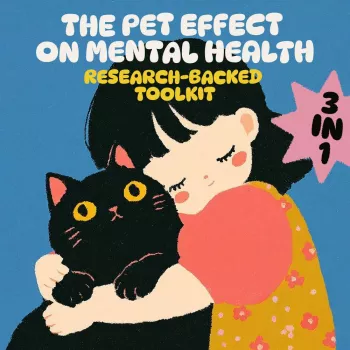
If you want a ready-made structure that keeps the process simple, The Pet Effect on Mental Health: Research-Backed Toolkit (3-in-1 Digital Download Bundle) is designed to turn supportive moments with your pet into repeatable routines.
For an additional mindset-focused layer that pairs well with pet routines, Benefits of Positivity Bundle: Fuel Your Mind, Build a Positive Mindset & More can complement your daily structure by reinforcing helpful thought patterns and emotional reset practices.
How to personalize for different pets and living situations
Safety, boundaries, and when support is needed
Getting started in 10 minutes
FAQ
Do pets really improve mental health for everyone?
Not for everyone. Many people experience better day-to-day stress regulation, mood, and social support, but outcomes depend on fit, resources, and individual circumstances—and pets aren’t a replacement for mental health treatment.
What’s the simplest pet-based routine to reduce stress quickly?
Try 2 minutes of mindful petting paired with slow, paced breathing. Rate stress from 0–10 before and after; repeating this quick check-in helps you see whether it reliably brings your stress down.
Can this help if anxiety makes pet care feel overwhelming?
Yes, if you scale down to minimum-viable routines and add support (clear boundaries, simplified tasks, or help from others). If anxiety is intense, escalating, or causing intrusive thoughts, professional support can help you use pet routines safely and effectively.











Leave a comment