Calm Cat Grooming Routine: 3-in-1 Digital Bundle
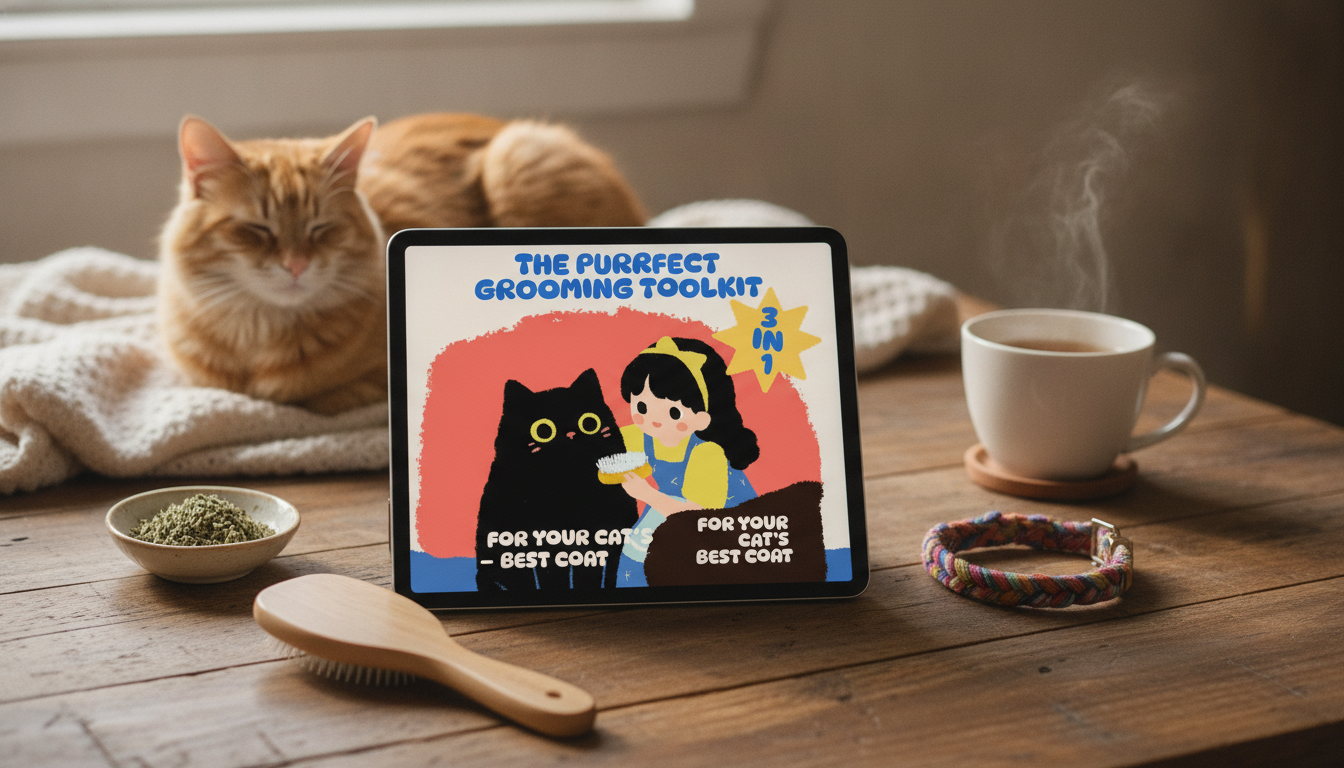
The Purrfect Grooming Toolkit for Your Cat’s Best Coat: 3-in-1 Digital Download Bundle
A healthy-looking coat starts with simple, repeatable grooming habits that fit your cat’s personality, coat type, and tolerance for handling. This 3-in-1 digital download bundle is designed to help build a calm grooming routine with practical checklists, step-by-step guidance, and an easy plan that can be printed or used on a phone—so brushing, detangling, and coat care feel manageable instead of stressful.
What this 3-in-1 digital bundle helps with
- Turns grooming into a routine: quick daily touch-ups and longer weekly sessions
- Reduces common coat issues: loose fur buildup, mild tangles, and uneven shedding
- Supports comfort-first handling: pacing, breaks, and positive reinforcement cues
- Helps identify when grooming is normal maintenance vs. when to call a vet or groomer
- Works for multi-cat households with separate tracking sheets and notes
Many coat problems aren’t caused by “not brushing enough,” but by inconsistent timing, rushed technique, and pushing past your cat’s tolerance. A simple plan that’s easy to repeat is often the difference between a cat who bolts at the sight of a brush and a cat who stays put for a short, predictable session.
Set up a calm grooming space (before the first brush)
- Pick a consistent location: a quiet room, a non-slip mat, and a surface the cat can leave without feeling trapped
- Keep sessions short at first: 1–3 minutes, ending before irritation starts
- Use predictable cues: same phrase, same towel, same order of steps to build familiarity
- Pair handling with rewards: treats, play, or a preferred scratch spot after each micro-session
- Watch body language: tail swishing, skin twitching, ears back, or sudden head turns signal it’s time to pause
Think of early grooming as “training for calm” rather than “finishing the whole job.” A cat that learns grooming always ends on a good note is far more likely to cooperate tomorrow.
Daily and weekly plan for a better coat
- Daily (1–3 minutes): quick pass over high-shed zones (back, sides), check for small tangles, and wipe eye corners if needed
- Every 2–3 days: focus on friction areas (armpits, behind ears, belly if tolerated) where mats start
- Weekly (10–20 minutes): thorough brush-out, nail check, ear look-over, and a coat/skin scan for bumps, dandruff, or redness
- Seasonal shedding: increase brush frequency and reduce session intensity to avoid skin irritation
- Record what works: time of day, favorite reward, and tools used to make the routine repeatable
Sample schedule by coat type
| Coat type | Quick touch-ups | Full session | Common trouble spots |
|---|---|---|---|
| Short-haired | 3–5x/week | 1x/week | Lower back, base of tail |
| Medium-haired | Daily or every other day | 1–2x/week | Behind ears, armpits |
| Long-haired | Daily | 2x/week | Belly, ruff, hindquarters |
If your cat is sensitive, keep the schedule but shorten each session—consistency beats intensity. During heavy shedding, aim for more frequent, gentler passes instead of long brush-outs that can over-stimulate the skin.
Brushing technique that prevents pulling and stress
- Start with gentle strokes: brush with the direction of hair growth to avoid tugging
- Work in sections: one shoulder, then side, then back—stop before the cat becomes restless
- Hold the base near the skin when addressing small tangles to reduce pulling
- Use a comb to finish: combing after brushing helps catch remaining loose hair and small knots
- Avoid sensitive zones first: begin where the cat enjoys touch (often cheeks/neck) and progress gradually
A helpful rhythm is “two calm strokes, pause, reward.” That tiny pause gives your cat a moment to reset and makes the session feel cooperative instead of restrictive.
Handling mats and tangles safely
Coat care beyond brushing
For additional cat-care guidance, see the ASPCA’s cat grooming tips, learn common signs of fleas from Cornell University’s feline health resources, and review hairball considerations via VCA Animal Hospitals.
What’s included in the digital download bundle
If you want a ready-to-use structure (instead of trying to remember what worked last time), start here: The Purrfect Grooming Toolkit for Your Cat’s Best Coat – 3-in-1 Digital Download Bundle.
Helpful add-ons to keep routines consistent
- Benefits of Positivity Bundle: Fuel Your Mind, Build a Positive Mindset & More (useful for building calmer routines and sticking with small daily habits)
- Large Capacity Y2K Puppy Pencil Case (a simple way to keep printed grooming checklists, a pen, and notes together)
FAQ
How often should a cat be brushed?
Most short-haired cats do well with brushing 3–5 times per week, medium-haired cats often need daily or every-other-day sessions, and long-haired cats typically benefit from daily brushing. During seasonal shedding, increase frequency but keep sessions short and gentle to avoid skin irritation.
What should be done if a cat has mats close to the skin?
Don’t pull or cut mats close to the skin because it’s easy to injure your cat. If the mat is loose you can try gentle finger-splitting in short sessions, but if it’s tight, painful, or the skin looks red, consult a professional groomer or veterinarian.
Are digital grooming guides useful if grooming tools are already available?
Yes—tools work best when paired with a repeatable routine, calming handling steps, and a way to track what your cat tolerates. A digital guide helps standardize timing, technique, and notes so grooming gets easier over time instead of turning into a guessing game.












Leave a comment