3pcs Baby Finger Toothbrush Set for First Teeth Care
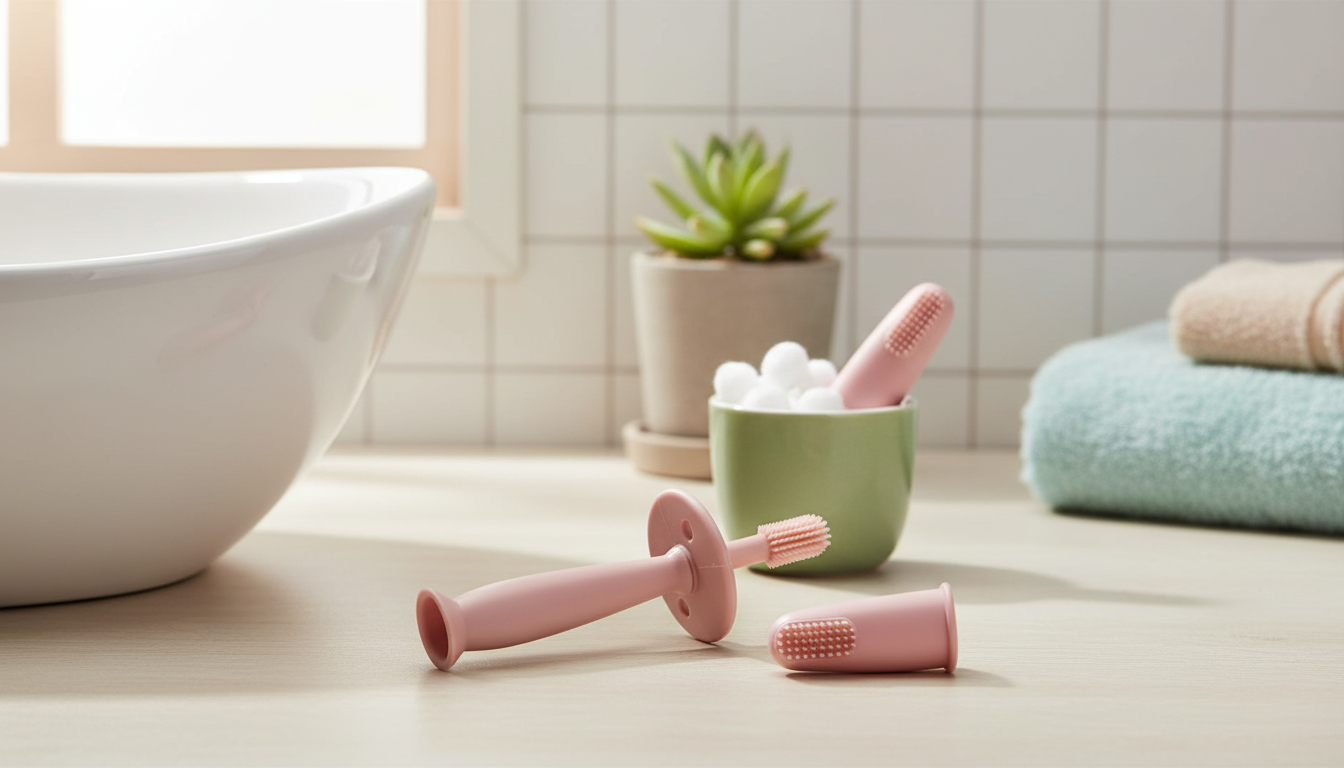
3pcs Baby Finger Toothbrush Set: Gentle Gum Care and First Teeth Cleaning
A finger toothbrush set supports early oral care by making it easier to clean tiny teeth, massage sore gums, and build a calm brushing routine from the start. With your finger doing the guiding, you can keep pressure light, reach the gumline easily, and help your baby get used to daily mouth cleaning long before a full-size brush feels comfortable. Below is a practical guide to what the 3-piece set includes, when to start, how to clean it safely, and how to get the best results during teething and the first-tooth stage.
What a Finger Toothbrush Set Helps With
- Cleans milk residue and early plaque from emerging teeth with a soft, controlled motion.
- Massages gums to soothe teething discomfort while keeping hands close for comfort.
- Introduces a consistent oral-care routine before a full toothbrush feels manageable.
- Helps caregivers reach along the gumline and behind front teeth where buildup often starts.
- Works well after feeds and before bedtime as a short, predictable habit.
For broader guidance on infant oral health routines and why early cleaning matters, see recommendations from the American Academy of Pediatric Dentistry (AAPD) and the CDC’s children’s oral health basics.
What’s Included in the 3-Piece Set
- A set of three finger toothbrushes for rotation between uses and easier hygiene management.
- Sized to fit on an adult finger to provide precise control and gentle pressure.
- Soft bristles/silicone-like texture intended for delicate gums and early teeth.
- Useful as a home set plus a spare for diaper bag, travel pouch, or childcare drop-off.
Quick Look: When Each Piece Is Useful
| Piece | Best use | Why it helps |
|---|---|---|
| Brush 1 | Daily use at home | Establishes routine with a consistent feel |
| Brush 2 | Backup while one dries | Reduces moisture buildup between sessions |
| Brush 3 | Travel/childcare | Keeps a clean option available away from home |
If you want a simple, budget-friendly starter set, the 3pcs Baby Finger Toothbrush Set is in stock and ready to ship.
When to Start and How Often to Use It
- Before teeth: wipe and massage gums gently to keep the mouth clean and get baby used to the sensation.
- With first tooth: clean along the gumline and tooth surfaces using small circular motions.
- Typical routine: once to twice daily depending on feeding schedule and tolerance.
- After nighttime feed: a brief clean can help reduce milk pooling around early teeth.
- Keep sessions short at first (30–60 seconds) and increase as baby tolerates.
As brushing becomes part of the day, many families find it easiest to tie the routine to predictable moments—after the last feed, after a bath, or right before a bedtime story—so the sequence feels familiar.
How to Use a Finger Toothbrush Safely
- Wash hands thoroughly before use; remove rings that could scratch gums.
- Slide the brush fully onto the finger for a snug fit; avoid using it if it feels loose.
- Use gentle pressure and small circles on teeth; use light strokes on gums.
- Support baby’s head and keep baby upright or slightly reclined for better control.
- Stop if baby is biting hard or distressed; try again later with a shorter session.
- Avoid using adult toothpaste; if using toothpaste, follow pediatric dental guidance for age-appropriate amounts.
For toothpaste and brushing amounts by age, the American Dental Association (ADA) guidance on children’s oral care is a helpful reference to discuss with your pediatric dentist.
Cleaning, Drying, and Replacing
- Rinse immediately after use to remove milk or food residue.
- Wash with mild soap and warm water; pay attention to the bristle area and inner surface.
- Let it air-dry completely in a clean, ventilated area; avoid closed containers while damp.
- Replace if the brush shows tearing, cracking, persistent odor, or flattened bristles.
- Do not share between children to reduce cross-contamination.
- If dropped on a public surface, wash thoroughly before using again.
Rotation is especially useful for hygiene: one brush can dry fully while another is in use. Fully drying between sessions helps reduce lingering odors and keeps the surface feeling fresh.
Comfort Tips for Teething Days
- Use slow, rhythmic gum massage to soothe soreness before bedtime.
- Chill (not freeze) the brush briefly if the material and instructions allow, then test temperature before use.
- Pair with a calming cue (song, consistent position, dim light) to reduce fussiness.
- If baby resists, focus on front gums/teeth for a few seconds and gradually expand coverage.
- Watch for signs of oral irritation or sores and pause use if rubbing seems to worsen discomfort.
Who It’s Best For
Product Details and Where to Get It
- Product: 3pcs Baby Finger Toothbrush Set
- Price: $2.32 (USD)
- Availability: In stock
- A simple, low-cost way to start a consistent oral-care routine with backups included.
Optional Add-On for On-the-Go Organization
If you like keeping baby care items separated in your bag, a roomy organizer can help. The Large Capacity Y2K Puppy Pencil Case is in stock and can be used to stash a spare finger brush, a small towel, and other quick-grab essentials for travel or childcare drop-off.
FAQ
Can a finger toothbrush be used before teeth come in?
Yes. Use it for gentle gum wiping and massage to remove residue and help your baby get comfortable with oral care. Keep sessions short and use light pressure.
How do you clean and store a baby finger toothbrush?
Rinse it right after use, then wash with mild soap and warm water. Air-dry it fully in a clean, open spot, and avoid storing it in a closed container while it’s still damp.
When should a baby finger toothbrush be replaced?
Replace it if you notice tears, cracks, persistent odor, stickiness, or visible wear such as flattened bristles. It’s also a good idea to replace after illness or anytime it can’t be cleaned thoroughly.











Leave a comment