Calm Grocery Shopping with Kids: Checklist & Reset Plan
Why grocery trips melt down (and what to fix first)
Most grocery-store blowups aren’t about “bad behavior”—they’re about a predictable mix of stressors that stack up fast. When you fix the biggest triggers first, the whole trip gets easier.
- Overstimulation: Bright lights, loud announcements, crowded aisles, and constant visual input can drain kids’ patience quickly.
- Hunger and fatigue: A low blood-sugar kid (or an overtired one) is far more likely to whine, argue, or bolt.
- Unclear expectations: If rules change every trip, kids keep testing to see what “counts” today.
- Too much waiting: Slow pacing and long lines leave extra room for grabbing, bickering, and restlessness.
- Too many “no” moments: Constant refusals can turn the trip into a power struggle instead of a simple errand.
A calm trip usually comes down to three things: a short plan, a clear role for the child, and quick resets that prevent small stress from becoming a showdown.
Before you leave: a 10-minute setup that changes the whole trip
The easiest wins happen before you even touch the cart. A small setup creates predictability—kids know what’s coming, and caregivers aren’t improvising under pressure.
- Pick the right time: Aim for “fed and rested.” Even a small snack before leaving can prevent a spiral.
- Preview the plan: Try a short script: “We’re getting five things, then checkout, then home.”
- Set 2–3 clear rules: Examples: inside voice, hands stay on cart, ask before touching.
- Assign roles by age: A job turns the store from “waiting” into “helping.”
- Pack the calm kit: Snack, water, wipes, small toy, plus a backup activity for the line.
- Decide on treats ahead of time: One pre-chosen item, or a firm “not today,” prevents aisle negotiations.
Quick Prep Checklist by Age
| Age | What to pack | Job for the child | Boundary to emphasize |
|---|---|---|---|
| 1–2 | Snack, water, wipes, comfort item | Hold a safe item (e.g., bananas) or point to pictures | Hands stay on cart / stay seated |
| 3–5 | Snack, small toy, sticker sheet | Find items by color/shape; help place items in cart | Ask before touching; walking feet |
| 6–9 | Snack, pencil, small notepad | Check off list; count items; choose between two options | Stay close; respectful voice |
| 10+ | Phone-free option, notepad, budget limit | Compare unit prices; help bag; track spending | No wandering; help the team finish quickly |
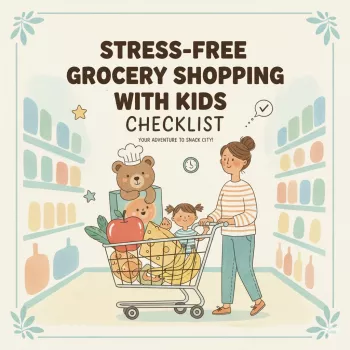
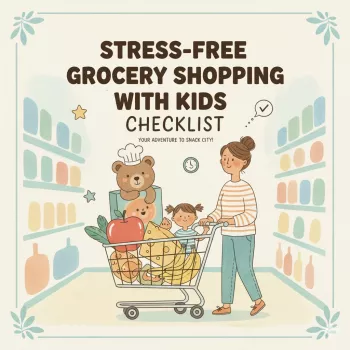
If a written plan helps your household stay consistent, the Stress-Free Grocery Shopping with Kids Checklist (digital guide) is an easy way to keep rules, roles, and reset scripts in one place—on your phone or printed for the fridge.
At the store: a calm routine from cart to checkout
Once you walk in, the goal is steady momentum and simple structure. Kids do best when the trip feels predictable and moving.
- Start with a “yes” task: Let your child place a planned item in the cart early (like apples or cereal). Cooperation builds when kids feel included.
- Keep the pace: Fewer stops means fewer chances to derail. When possible, skip “just looking” aisles.
- Use “choice within limits”: Offer two acceptable options: “Should we get apples or oranges?” You stay in charge, and kids still get autonomy.
- Narrate transitions: “Two more aisles, then checkout.” The end feels safer when it’s predictable.
- Make waiting structured: Use a line game (I-spy, count items, name foods by letter) instead of unstructured standing.
- Reinforce quietly: Praise specific behavior: “Nice job keeping your hands on the cart.”
For older kids who like a “checklist job,” a small notepad and pencil can help. If you want a dedicated spot to keep those supplies in the car, the Large Capacity Y2K Puppy Pencil Case is an easy way to store a pen, sticky notes, and a few calm-down activities without digging through the diaper bag.
Meltdown prevention and quick resets (without turning it into a showdown)
Prevention is mostly noticing the early signals and responding before you’re both at your limit. Self-regulation skills grow with practice and support—especially when adults stay calm and consistent (Harvard’s overview is a helpful read: InBrief—The Science of Self-Regulation).
For guidance that aligns with common pediatric recommendations, the American Academy of Pediatrics emphasizes calm, consistent discipline and clear expectations (see Positive Discipline). The CDC also has practical age-based parenting tips that support routines and boundaries (Positive Parenting Tips).
Checkout and leaving: the most important two minutes
After the trip: build habits that make the next one easier
If you want extra support staying calm under pressure (especially during repetitive routines), the Benefits of Positivity Bundle can be a helpful add-on for caregivers who like structured prompts and mindset tools.
Printable support for your routine
FAQ
How long should a grocery trip be with toddlers?
Aim for about 20–40 minutes when possible, because toddlers burn through patience quickly in overstimulating environments. Keep it brief by shopping from a tight list, ordering aisles strategically (produce/dairy last if it helps pace), avoiding peak hours, and using pickup/delivery for big restocks.
What if my child asks for treats every aisle?
Decide the treat rule before you enter—either one pre-chosen item or a consistent “not today”—and stick to it without negotiating mid-trip. A simple visual reminder (“Today: apples, bread, milk—no treats”) and limited choices within your plan can reduce repeated asks.
How can siblings stop fighting in the cart or aisles?
Separate them when you can (cart seat vs. walking, or opposite sides of the cart) and give each child a distinct job so they’re not competing for attention. Use cooperative games (team points for “quiet hands” or “staying close”) and a clear consequence ladder for unsafe behavior, like switching to hand-holding or cart seating immediately.






Leave a comment