Calm Rule Follow-Through: A Gentle Parenting Checklist
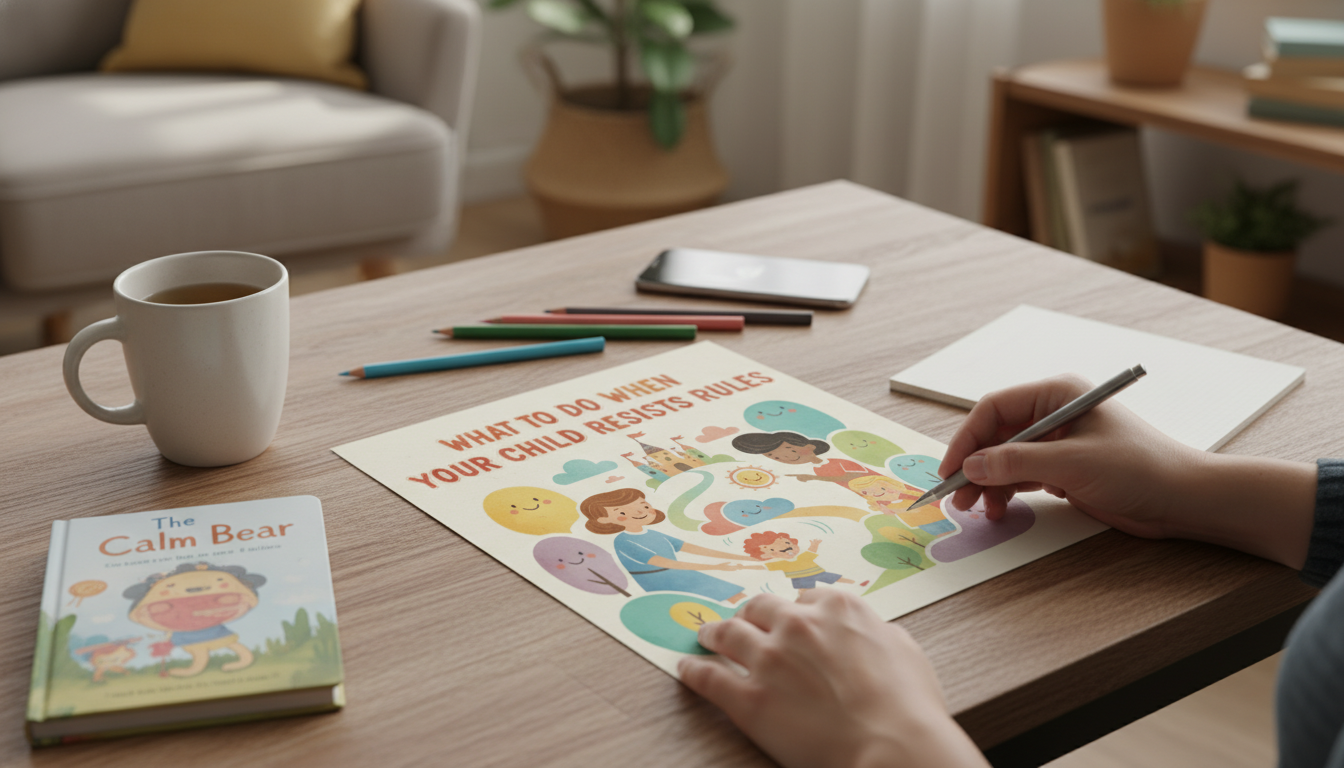
When Kids Push Back on Rules: A Calm Checklist for Gentle, Firm Follow-Through
Rule resistance is common—especially when kids are tired, hungry, overstimulated, or testing how safe and consistent a boundary really is. A simple step-by-step checklist helps reduce power struggles, keeps expectations clear, and supports connection while staying firm. Below is a practical flow to follow in the moment, plus phrases and small setup tweaks that make rules easier to follow without escalating conflict.
Why kids resist rules (and why it’s not just “defiance”)
Pushback is often less about “bad behavior” and more about what’s happening under the surface.
- Developmental needs: Kids crave autonomy and control; practicing limits can look like arguing or refusing.
- Lagging skills: Impulse control, transitions, frustration tolerance, and flexibility develop over years—not days.
- State issues: Tiredness, hunger, sensory overload, and anxiety can turn a small request into a big reaction.
- Connection tests: Some kids push boundaries to check whether the adult stays calm, steady, and present.
- Mismatch problems: Rules that are unclear, too many, or hard to comply with invite conflict.
Helpful resources on supportive discipline and child development include the American Academy of Pediatrics and the CDC’s parenting guidance.
A quick reset before responding
When a rule is challenged, the adult’s nervous system often sets the tone. Before you respond, try this rapid reset:
- Pause for one breath and soften your face and shoulders to signal safety.
- Lower your voice and reduce words; too many explanations can intensify the moment.
- Move closer calmly while respecting physical space.
- Check basics fast: “Are you hungry/tired/need the bathroom?” (without bargaining the rule away).
- Decide what’s non-negotiable (the boundary) and what’s negotiable (choices about how/when).
The checklist flow: what to do when your child resists a rule
This sequence works best when it’s predictable. Kids don’t have to like the boundary to follow it—especially when the steps stay consistent.
- Name the rule simply: one sentence, no lecture. (“Shoes stay on outside.”)
- Validate feelings without changing the boundary: (“You’re mad you can’t keep playing.”)
- Offer two acceptable choices: (“Walk to the car or hop to the car.”)
- State the next step clearly: (“If you don’t choose, I’ll choose and help your body to the car.”)
- Follow through calmly and immediately: avoid repeated warnings that teach arguing.
- After compliance, reconnect: a small repair (smile, gentle touch, brief appreciation) reduces shame.
- Later, problem-solve: name the hard part, practice the skill, and adjust the environment for next time.
From rule resistance to cooperation: quick options that keep the boundary
| Moment | What to say | What to do |
|---|---|---|
| Child says “No!” | “You don’t like this rule. The rule stays.” | Hold steady; keep words minimal. |
| Arguing/negotiating | “I’ll listen after the rule is followed.” | Repeat once; then follow through. |
| Stalling | “It’s time. Choose A or B.” | Use a timer; give one clear prompt. |
| Yelling/crying | “You’re having a hard time. I’m here.” | Stay nearby; reduce demands, keep boundary. |
| Refusing to move | “I’ll help your body if you can’t.” | Offer help; carry/guide safely if needed. |
| Afterward | “That was tough. We got through it.” | Reconnect; teach a replacement skill later. |
Phrases that reduce power struggles (without giving in)
- Boundary + empathy: “I hear you. And the rule is…”
- Choice within limits: “You can do it by yourself or with help.”
- Short repeat: “Asked and answered.”
- When/then: “When teeth are brushed, then we read.”
- Team language (after the boundary is met): “Let’s figure this out together.”
- Repair language: “I didn’t like how I sounded. The rule is the same, and I’m ready to try again calmly.”
Common traps that make resistance worse
- Too many warnings: teaches children to wait for the 5th request.
- Explaining during escalation: brains in fight/flight can’t absorb logic.
- Big consequences for small issues: increases resentment and repeat conflict.
- Negotiating after saying “no”: trains persistence and arguing.
- Inconsistent follow-through: creates uncertainty and more testing.
- Shame-based labels: (“bad,” “rude,” “lazy”) harms connection and doesn’t teach the missing skill.
For more on discipline approaches that protect the parent-child relationship while building skills, see the American Psychological Association’s parenting resources.
Make rules easier to follow: set up the environment
Using a printable checklist in real life
Printable checklist: what’s included and who it helps
If you want a ready-to-use version you can print and reuse, the Checklist: What to Do When Your Child Resists Rules (Printable) is designed as a simple, in-the-moment flow with brief, kind language prompts.
- Benefits of Positivity Bundle: Fuel Your Mind, Build a Positive Mindset & More (for caregivers who want practical mindset supports for staying regulated and consistent).
- Large Capacity Y2K Puppy Pencil Case (a simple way to reduce daily friction by keeping school or “on-the-go” supplies in one easy-grab spot).
FAQ
What if my child screams or melts down when I enforce a rule?
Keep the boundary and focus on safety: acknowledge feelings, reduce words, and stay nearby as a calm anchor. Follow through without adding extra consequences in the heat of the moment, then problem-solve later when your child is calm.
Is offering choices the same as giving in?
No—choices work best when they stay inside the boundary. You’re not changing the rule; you’re offering autonomy in the “how” (two acceptable options) so your child can cooperate without feeling powerless.
How many times should a rule be repeated before consequences?
Aim for one clear reminder plus a stated next step, then follow through calmly. Repeating the rule many times often teaches kids to delay; consistent, immediate, logical follow-through tends to reduce arguing over time.











Leave a comment