Kindergarten Struggles? A Calm Checklist for Parents
When Kindergarten Feels Tough: A Gentle Parent Checklist for Emotional and Academic Support
Kindergarten can look “fine” on paper while feeling overwhelming in real life—big routines, new social rules, louder rooms, and higher expectations. When a child starts resisting school, melting down after pickup, or falling behind, small, steady supports at home and school can make a noticeable difference. The checklist below focuses on calm, practical steps that strengthen safety, skills, and confidence without pressure.
What “tough kindergarten” can look like (and why it happens)
Some kids don’t have the words to explain what’s hard yet, so stress shows up in patterns.
- Common signs: school refusal, frequent tears, stomachaches/headaches, sudden irritability, sleep changes, clinginess, shutdowns, or daily after-school meltdowns.
- Learning flags: struggling to follow multi-step directions, difficulty with letters/sounds or early number sense, avoiding writing, frustration with fine-motor tasks, rushing work, or perfectionism.
- Social flags: conflicts during play, being left out, not reading social cues, or feeling “in trouble” often.
- Why it happens: big transitions, sensory overload, separation stress, language/attention differences, developmental variation, or a mismatch between expectations and readiness.
If school avoidance or distress is persistent, it can help to compare what you see with pediatric guidance on school refusal and anxiety signs from trusted sources like the American Academy of Pediatrics and Understood.
First 48 hours: stabilize, don’t escalate
When kindergarten feels rough, the fastest progress often comes from lowering the emotional “temperature,” not increasing pressure.
- Lower the temperature: keep responses calm and brief during tough moments; long lectures usually increase stress.
- Name the feeling, then anchor: “School days feel hard. You’re safe. We’ll make a plan.”
- Protect sleep and food: consistent bedtime, protein at breakfast, and a predictable after-school snack reduce meltdowns and attention dips.
- Create a decompression routine: 20–30 minutes of quiet play, outside time, or movement before discussing school.
- Watch for patterns: note days/times that are hardest (arrival, recess, math block, specials, transitions).
| What you notice | What it may mean | What to try today |
|---|---|---|
| Tears at drop-off but okay later | Separation stress / transition difficulty | Short goodbye script, consistent handoff, comfort object if allowed |
| After-school meltdown every day | Masking all day / sensory fatigue | Decompression time, earlier bedtime, reduce evening demands |
| Avoids writing or complains hand hurts | Fine-motor fatigue / task too long | Shorter tasks, thicker pencil/crayon, fun tracing/play-dough strength |
| Frequent “in trouble” reports | Skills gap in routines/self-regulation | Practice scripts, role-play, ask teacher for 1–2 target behaviors |
| Says “I’m dumb” or “I hate school” | Shame/low confidence, fear of mistakes | Praise effort, normalize mistakes, set tiny goals, celebrate progress |
The gentle parent checklist: daily supports that build safety
Consistency beats intensity. Choose a few supports and repeat them until they feel automatic.
- Use a predictable morning rhythm: visual steps (dress, breakfast, shoes, out the door) and a timer for transitions.
- Keep drop-off steady: one hug, one phrase, one handoff—avoid prolonged negotiations.
- Offer a connection ritual: a “secret handshake,” a small note in lunch, or a pocket-size reassurance card.
- Set one manageable home expectation: a 5–10 minute “school skill” routine rather than long homework-like sessions.
- End the day with repair: highlight one win (“You kept trying”) and one plan (“Tomorrow we’ll practice asking for help”).
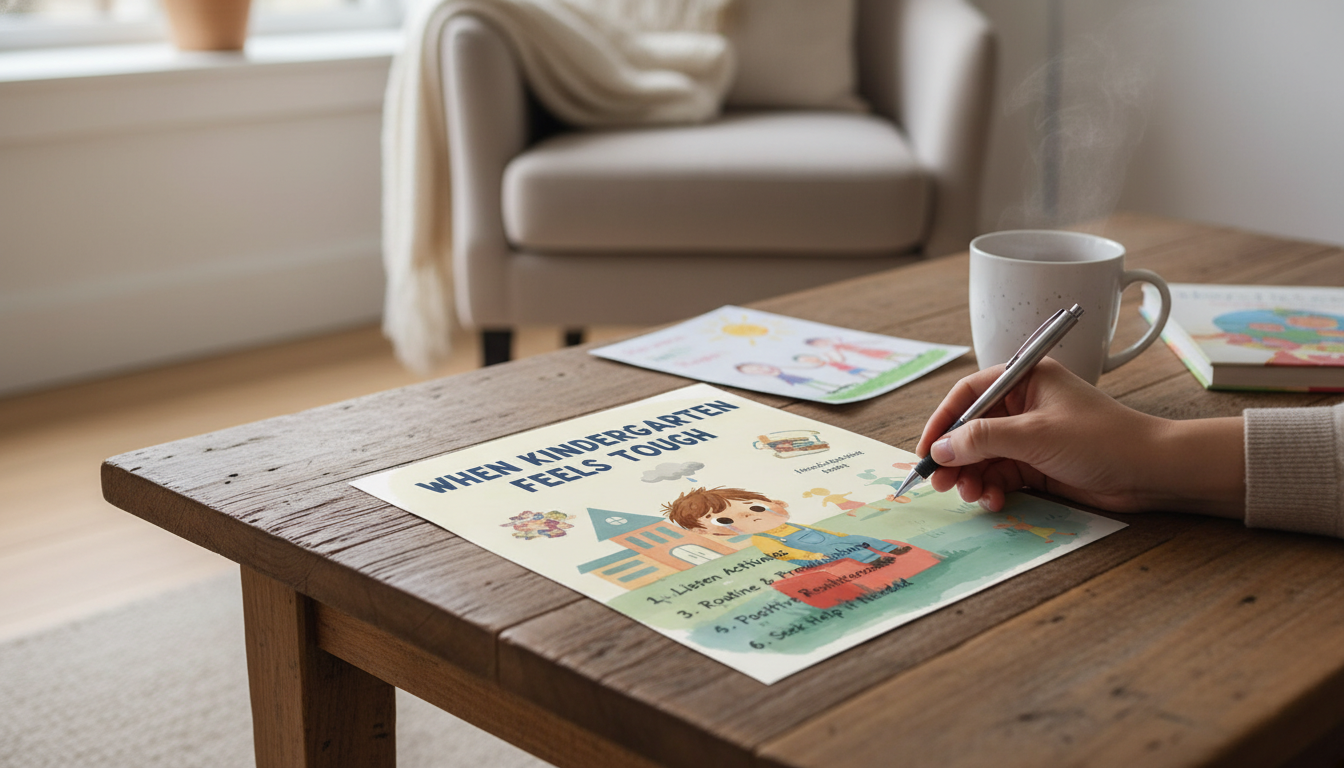
If having the steps written out helps you stay steady on hard weeks, see the When Kindergarten Feels Tough printable parent checklist.
Emotional regulation tools for kindergarten-sized feelings
Regulation skills grow with practice—especially when kids rehearse them before they’re upset.
For more everyday language that supports connection and cooperation, the CDC’s positive parenting communication tips can be a helpful refresher.
Gentle academic support without turning home into school
If your child benefits from having their own “school tools” at home (especially for short, low-pressure practice), a dedicated supply pouch can reduce friction. The Large Capacity Y2K Puppy Pencil Case is an easy way to keep pencils, crayons, and scissors in one predictable spot.
Partnering with the teacher: a simple, effective communication plan
When to seek extra help (and what to ask for)
Printable checklist: a calmer way to stay consistent
For a ready-to-use option, the When Kindergarten Feels Tough printable parent checklist lays out simple steps you can repeat daily without overthinking.
If your child is getting stuck in negative self-talk (“I can’t,” “I’m bad at school”), a steady mindset routine at home can help. The Benefits of Positivity Bundle for building a steady mindset at home can support more encouraging language and habits across the week.
FAQ
How long does it take for a child to adjust to kindergarten?
Many children settle in within a few weeks, but it can take a couple of months for routines and confidence to feel steady. It’s common to see setbacks after weekends or school breaks; what matters is whether the intensity and frequency of distress are gradually decreasing. If distress stays high or escalates after several weeks, consider looping in the teacher and pediatrician.
What should a parent say when a child cries at drop-off?
Use a short script that validates, expresses confidence, and names the plan: “This is hard. You’re safe. Ms. ___ will help you start your day. I’ll see you after school.” Keep the goodbye routine consistent and avoid prolonged bargaining; a quick, calm handoff usually helps the crying pass sooner.
How can parents support learning at home without causing more stress?
Keep practice brief (5–10 minutes), playful, and focused on one target skill your teacher says matters most right now. Use games, reading together, and fine-motor play instead of long worksheets, and stop before frustration spikes. Protecting sleep and allowing decompression time often improves learning more than extra drills.











Leave a comment