How Smart LED Bulbs Work: Controls, Color, Connectivity
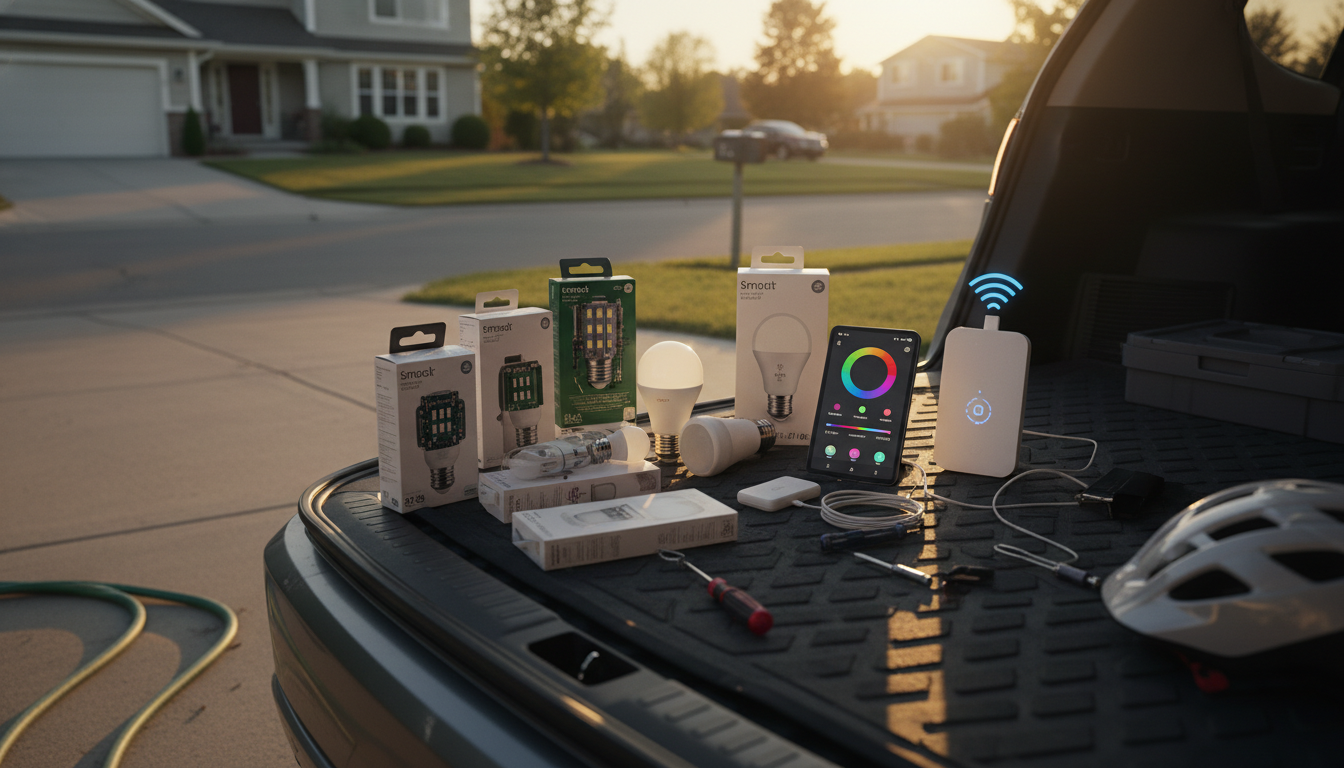
How does smart LED work?
Smart LED lighting works by combining an energy-efficient LED light source with a small control system that can receive commands and adjust the light on demand. Unlike a standard bulb that simply turns on or off with power, a smart LED has electronics inside that manage brightness, color, schedules, and automation. Those controls are typically accessed through a phone app, a voice assistant, or a smart home hub.
The LED light engine
At the core is an LED (light-emitting diode), a semiconductor that produces light when electricity flows through it. LEDs are efficient because they convert more energy into light rather than heat, and they last a long time under normal operating conditions.
The driver and onboard “brain”
Smart LEDs include a driver that converts household AC power into the low-voltage DC power the LEDs need. Alongside the driver is a microcontroller that acts like a tiny computer, interpreting commands such as “dim to 20%” or “set to warm white.” Dimming is usually done by precisely modulating power (often via pulse-width modulation), which changes perceived brightness without making the light flicker noticeably.
Wireless connectivity (Wi‑Fi, Bluetooth, Zigbee, or Matter)
To be “smart,” the bulb needs a way to communicate. Wi‑Fi models connect directly to a router for remote control. Bluetooth models connect locally to a phone, often without internet access. Zigbee and similar mesh protocols typically rely on a hub, but can improve reliability by letting devices relay signals. Some products also support newer standards designed to simplify compatibility across platforms.
Color and tunable white control
Many smart LEDs include multiple LED channels—commonly warm and cool white, or red/green/blue plus white. The controller blends these channels to create different color temperatures (cozy warm to crisp daylight) or full-color effects, while keeping output stable and consistent.
For a deeper breakdown of components, setup options, and what to expect in real-world use, visit the full guide on how smart LED works.
FAQ
Do smart LED bulbs use more electricity than regular LED bulbs?
Usually no. The wireless radio and control electronics add a small overhead, but the bulb’s power use is still dominated by the LEDs themselves, and it remains far lower than incandescent lighting.










Leave a comment