4L Evaporative Humidifier with App Control for Bedrooms
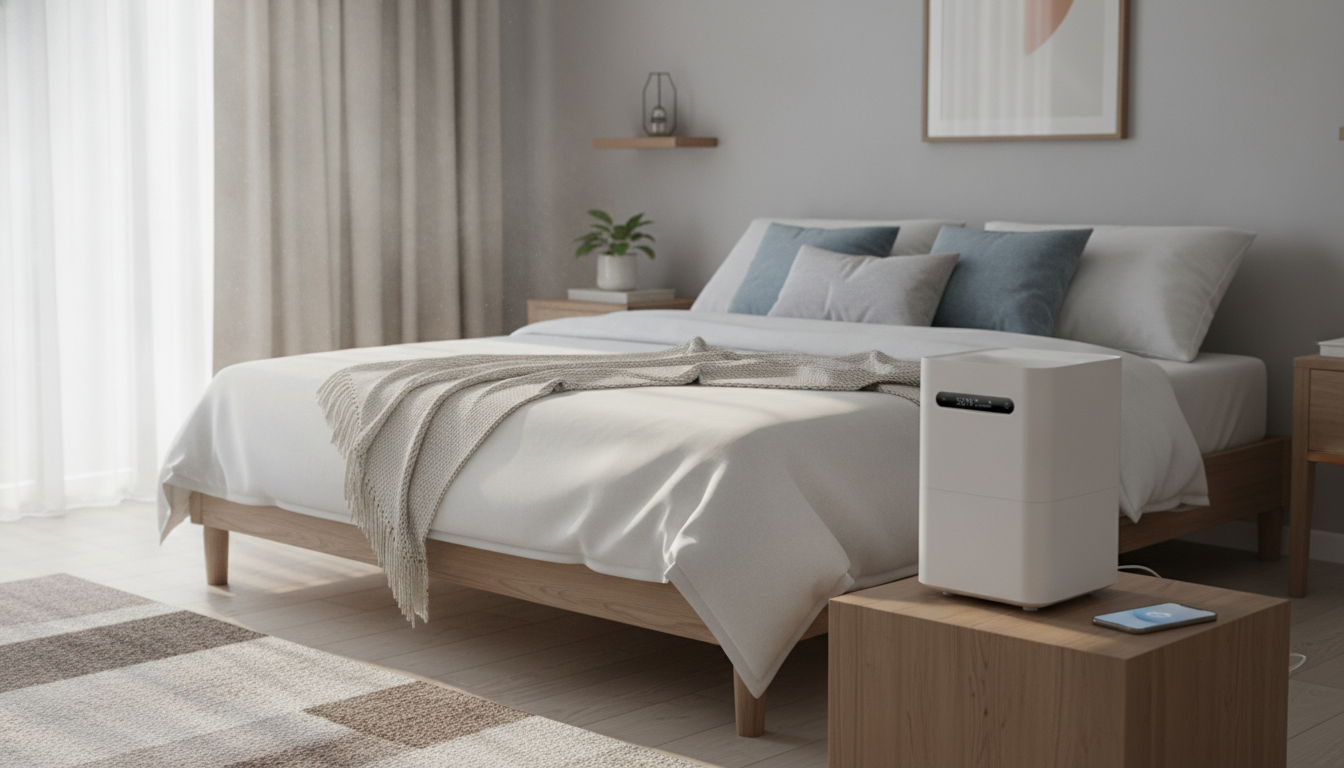
Advanced 4L Evaporative Humidifier with App Control: Comfortable Humidity Without the Guesswork
Dry indoor air can make a home feel less comfortable—especially during heating season or heavy AC use. It can also affect how restful a bedroom feels overnight and how your skin and throat feel in the morning. An evaporative humidifier helps balance humidity in a more natural, gradual way by pulling air through a water-soaked wick/filter and releasing moisture into the room at a steady pace.
This advanced 4L model adds app-based control, making it easier to schedule humidity support, check status quickly, and fine-tune settings from across the room—or while you’re out. The result is a calmer, more “set it and forget it” approach to everyday comfort.
What Makes an Evaporative Humidifier Different
- Uses a water-soaked wick/filter and airflow to add moisture, helping reduce the chance of over-humidifying compared with some misting styles.
- Delivers humidity in a steady, room-friendly way that can feel more consistent in bedrooms and living spaces.
- Pairs well with everyday routines because output tends to self-regulate as humidity rises.
- Typically benefits from regular wick/filter maintenance to keep performance steady.
That self-regulating feel is a big reason many households prefer evaporative humidification for sleep spaces. As the air becomes more humid, evaporation naturally slows—so the room is less likely to swing from “too dry” to “too damp.” For broader moisture-control best practices (and why keeping humidity reasonable matters), the EPA and CDC both emphasize moisture management to reduce mold risk: EPA moisture control guidance and CDC mold information.
App Control That Fits Real Life
- Remote adjustments: change modes or output without getting up, especially useful at night or with a sleeping baby.
- Schedules and timers: set humidity support for bedtime, morning dryness, or workday hours.
- Status visibility: quickly check whether the unit is running and when it may need refilling.
- Smarter routines: keep comfort stable while minimizing unnecessary runtime.
App control shines in the moments that usually break routines: waking up thirsty at 2 a.m., leaving for school drop-off, or realizing the room feels dry while you’re already in a meeting. Instead of “maxing it out” and hoping for the best, you can adjust incrementally, set a timer, and avoid running longer than needed.
4L Capacity: How Long It Can Help Between Refills
- A 4L tank is designed to reduce refill frequency compared with smaller countertop models.
- Best for bedrooms, nurseries, home offices, and other frequently used rooms where consistent humidity matters.
- Refill timing depends on room size, current humidity, temperature, and selected fan/output level.
- Keeping a nearby water bottle or pitcher simplifies top-ups without disrupting routines.
Refill Planning Guide (Typical Use Patterns)
| Scenario | Likely Setting | What to Expect | Practical Tip |
|---|---|---|---|
| Overnight bedroom use | Low to medium output | Often lasts through the night in many homes | Fill before bed and place away from fabrics and curtains |
| All-day home office | Medium output | May need a refill depending on dryness and room size | Use a schedule to focus runtime on peak dry hours |
| Very dry winter air | Medium to high output | Refills can be more frequent | Close doors/windows and target a comfortable humidity range |
| Mild season maintenance | Low output | Longer time between refills | Pair with a hygrometer to avoid running unnecessarily |
Comfort, Sleep, and Daily Use Benefits
- Supports comfortable breathing and throat comfort during dry seasons.
- Helps reduce static and the “dry air” feeling in frequently used spaces.
- Can improve perceived sleep comfort when humidity is kept in a moderate range.
- Useful for households that want gentle humidity support without visible mist.
For sleep, consistency is often the biggest win. A moderate humidity level can make a room feel less “crispy” overnight, while avoiding that overly damp feeling that can happen if humidity climbs too high. Comfort standards vary by home and climate, but broader indoor comfort guidance is commonly referenced through organizations like ASHRAE (for example, ASHRAE standards and guidelines).
Placement and Setup for Better Results
- Place on a stable, water-resistant surface with clearance around air intakes/outlets.
- Keep away from direct heat sources and avoid aiming airflow toward walls or electronics.
- Use in a room with the door mostly closed for more predictable humidity changes.
- If using an external hygrometer, place it across the room (not right next to the humidifier) for a truer reading.
Maintenance That Protects Performance
Humidity Targets and When to Adjust
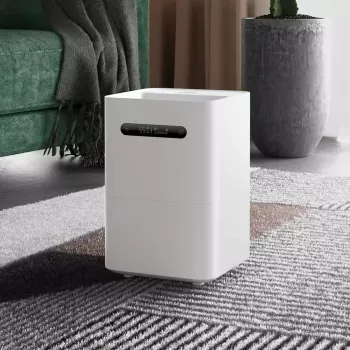
Product Option: Advanced 4L Evaporative Humidifier with App Control
Advanced 4L Evaporative Humidifier with App Control (In stock)
More In-Stock Picks
- Benefits of Positivity Bundle: Fuel Your Mind, Build a Positive Mindset & More
- Large Capacity Y2K Puppy Pencil Case
- The Ultimate Potato Pack for Cozy Dinners – 10-in-1 Digital Recipe Bundle with Different Potato Recipes, Comfort Food Guides & Cheesy Classics
FAQ
Is an evaporative humidifier good for a bedroom at night?
Yes—evaporative humidifiers tend to deliver moisture steadily, which can feel more consistent for sleep. Use a moderate setting, place it with good airflow, and consider schedules/timers so it doesn’t run longer than necessary.
How often does a 4L evaporative humidifier need to be refilled?
Refill frequency depends on how dry the room is, the room size, temperature, and the output/fan level you choose. Many households find a 4L tank can cover overnight use on lower settings, while all-day use may require a top-up in drier conditions.
What humidity level should a home aim for?
Many homes feel best in a moderate range that avoids “too dry” and “too clammy.” If you notice window condensation in cold weather, lower the humidity target or reduce runtime, and use a hygrometer across the room to confirm readings.









Leave a comment