Teach Toddlers Emotions: Simple Scripts & Calm Steps
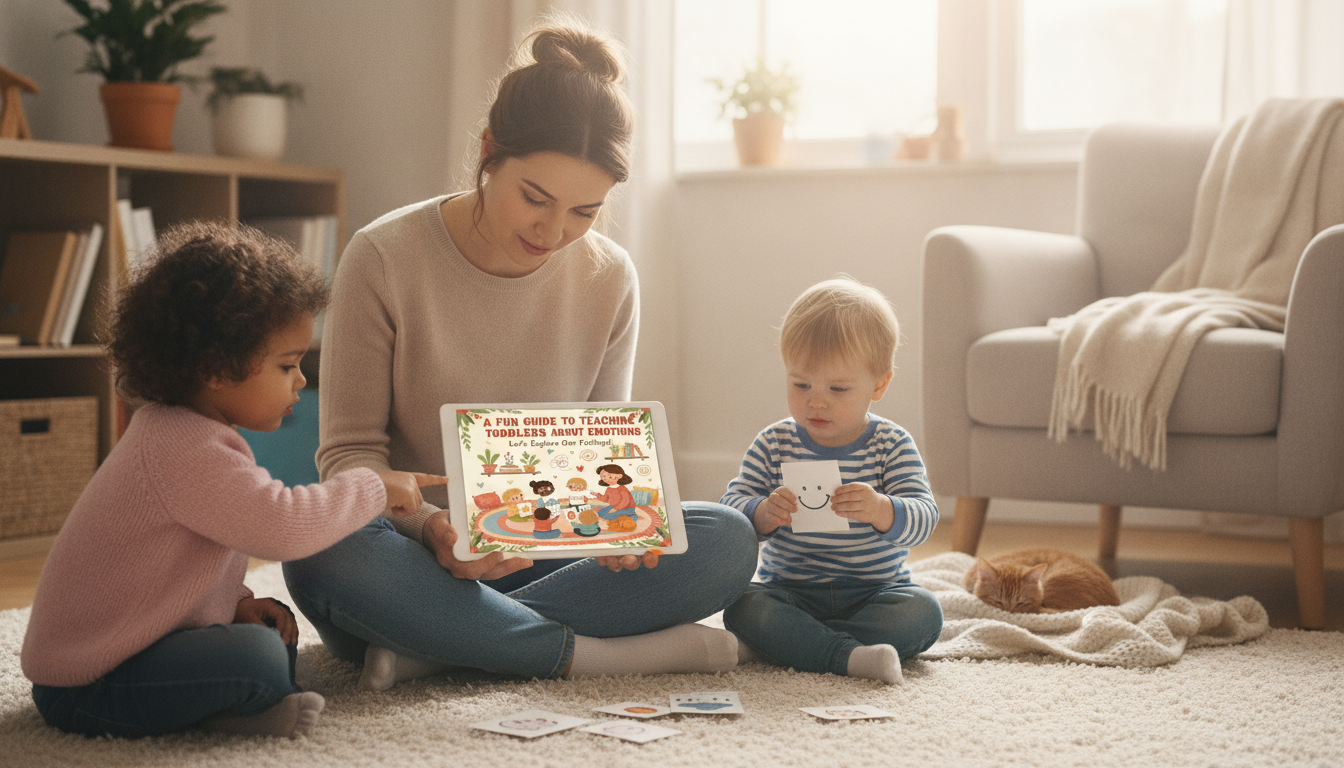
A Fun Guide to Teaching Toddlers About Emotions (Digital Download)
Toddlers feel big emotions long before they can explain what’s going on inside. A playful, repeatable routine—naming feelings, noticing body signals, and practicing simple calming steps—helps little ones communicate needs with fewer meltdowns and more confidence. Designed for ages 1–4, A Fun Guide to Teaching Toddlers About Emotions (digital download) focuses on easy activities, caregiver scripts, and printable-friendly ideas you can use in real life—during the calm moments and the chaotic ones.
Why emotion words matter in the toddler years
When toddlers learn even a few feeling words, it changes the whole “translation” process between their bodies and their behavior.
- Builds early communication: Naming feelings gives toddlers a bridge between sensations (“hot face,” “tight fists”) and words.
- Supports behavior: When kids can label emotions, they’re more likely to ask for help instead of acting out.
- Strengthens connection: Caregivers who reflect feelings (“You look frustrated”) help children feel understood and safe.
- Creates routines that transfer: The same language can be used at home, daycare, playdates, and doctor visits.
For a helpful overview of age-appropriate social-emotional growth, the CDC’s social/emotional milestones can be a useful reference point.
What toddlers can realistically learn about feelings (ages 1–2 vs. 3–4)
Emotion learning is not a straight line. One day your child may nail “mad,” the next day everything is “sad.” That’s normal—repetition is the lesson.
- Ages 1–2: Focus on a few core feelings (happy, sad, mad, scared) and simple matching (face → word).
- Ages 3–4: Add nuanced feelings (proud, worried, excited, disappointed) and basic causes (“I’m mad because…”).
- Keep expectations gentle: Identifying feelings correctly one day and missing it the next still counts as learning.
- Use consistent visuals and short phrases: The same faces and the same words reduce confusion.
A playful 3-step method: Notice, Name, Next
This simple structure makes it easier to respond without turning emotions into a quiz.
- Notice: Describe what you can observe without judgment. “Your hands are tight and your voice is loud.”
- Name: Offer a label and allow correction. “Are you feeling mad or frustrated?”
- Next: Give two supportive choices. “Do you want a hug or space?” “Stomp feet 5 times or take 3 balloon breaths?”
Practice when things are already calm—during play, books, or bedtime. When the brain is flooded, learning takes a back seat to survival-mode.
Everyday moments that naturally teach emotion skills
You don’t need extra time on the schedule. Daily routines are already full of emotion-learning moments.
- Books: Pause on faces and ask, “What do you think they feel?” Then add a simple cause: “He feels sad because his tower fell.”
- Play: Use dolls, stuffed animals, or cars to act out feelings and solutions (sharing, waiting, losing a turn).
- Mealtimes: Try a quick check-in with two options: “Happy or tired?” If they answer, you can gently expand.
- Transitions: Label common triggers (leaving the park, putting on shoes) and preview a tool: “We’ll do three slow breaths in the car.”
- Screens (if used): Narrate a character’s expression briefly, then return focus to your child: “Have you felt that way?”
For additional parenting guidance around feelings and behavior, HealthyChildren.org (American Academy of Pediatrics) offers practical, pediatrician-informed resources.
Emotion words + actions: a quick-reference chart for home
Toddlers do best when feelings are paired with a safe “next step.” Keep scripts short: one sentence to validate, one sentence to guide. Post a chart at toddler eye-level near a calm-down spot, bedroom, or play area.
Feelings, toddler-friendly scripts, and quick coping ideas
| Feeling | What it can look like | What to say | What to do next |
|---|---|---|---|
| Happy | Smiling, relaxed body, giggles | “You look happy!” | “Show me your happy dance.” |
| Sad | Tears, droopy face, quiet voice | “You feel sad. I’m here.” | “Hug, then pick a comfort toy.” |
| Mad | Yelling, stiff body, hitting/kicking urge | “You’re mad. Hands stay safe.” | “Stomp 5 times or squeeze a pillow.” |
| Scared | Clingy, wide eyes, hiding | “That felt scary.” | “Hold hands and take 3 slow breaths.” |
| Frustrated | Throwing toy, whining, “I can’t!” | “That’s hard. You’re frustrated.” | “Try again together, then take a break.” |
| Excited | Bouncing, loud voice, fast movements | “So excited!” | “Jump 3 times, then ‘quiet body’.” |
Fun activities that build emotion recognition (low-prep)
Keep activities light and short. A couple minutes, repeated often, tends to “stick” better than an occasional long lesson.
Handling big feelings in the moment (without turning it into a lecture)
Using the digital download: simple ways to make it stick
Recommended downloads to support your routine
- A Fun Guide to Teaching Toddlers About Emotions | How to Teach Toddlers to Identify Feelings | Digital Download Parenting Guide (digital download)
- Benefits of Positivity Bundle: Fuel Your Mind, Build a Positive Mindset & More (for caregivers who want extra support building encouraging, steady language at home)
FAQ
What age should toddlers start learning emotion words?
Many children can begin learning simple emotion labels around 18–24 months, with even earlier exposure through caregiver modeling. Start with 3–4 core feelings and pair the word with faces, tone, and body clues.
How many emotions should a toddler learn at once?
Aim for 3–5 to start (happy, sad, mad, scared, frustrated) and expand slowly over time. Consistent words and visuals matter more than trying to cover every emotion at once.
What if my toddler laughs or refuses when asked about feelings?
Refusal can mean overwhelm—or that your toddler is trying to turn it into play. Switch to two-choice prompts, model the words yourself instead of quizzing, and practice during calm moments with books, pretend play, or mirrors.










Leave a comment